


Back in September, I had the morning free before a wedding near London, Ontario. So I took the opportunity to drive south to visit both Port Stanley and Port Burwell, which have been on my to-visit list for years. If you take the road from Ingersoll south to Port Burwell, you arrive at the museum. There is actually a parking lot right next to the submarine, but I was so excited that I parked on the main street and walked down the hill. Since I have so many photos, this will be part 1.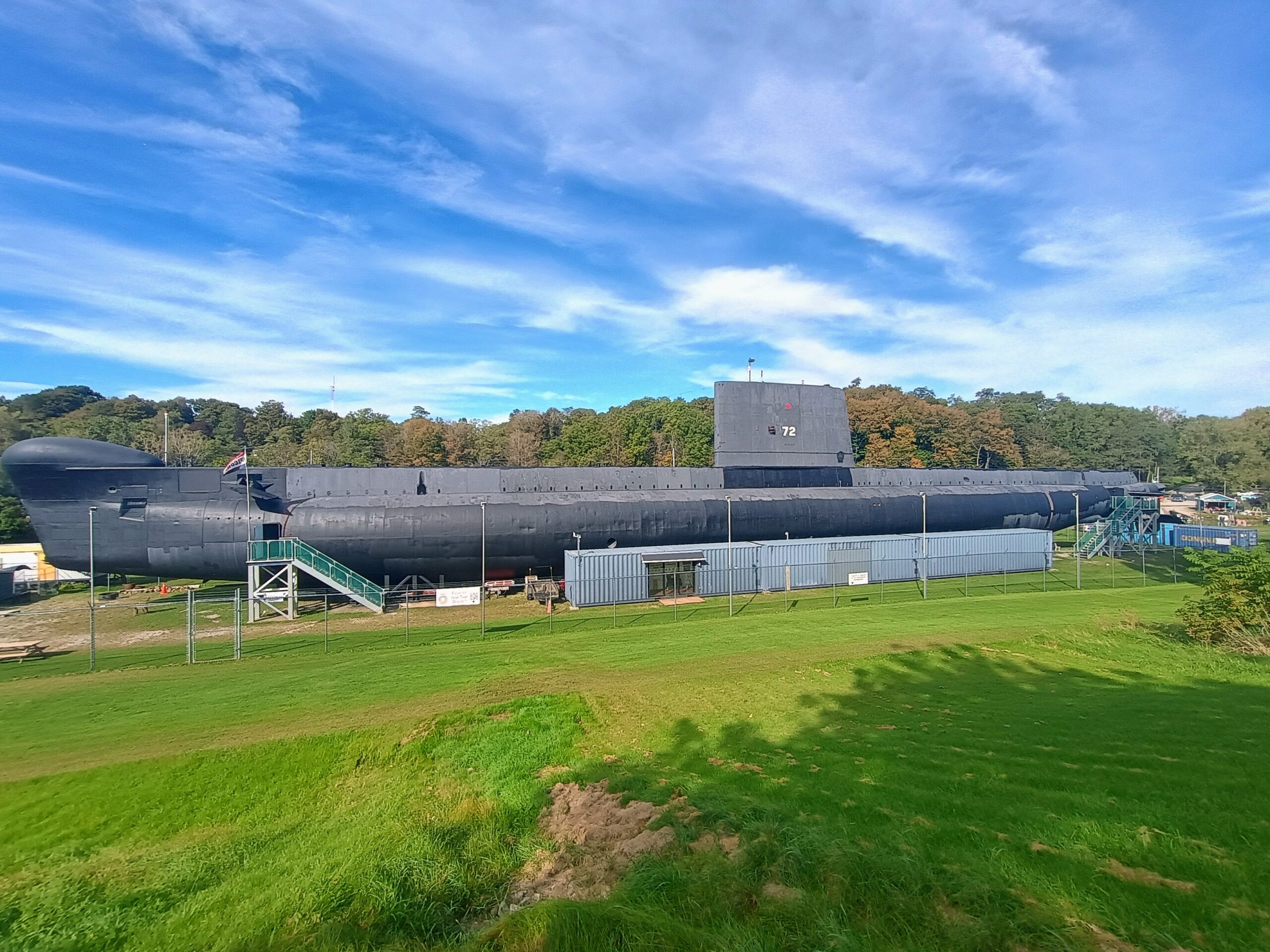
View of Ojibwa from up the hill, near the Main Street of Port Burwell.

A nice bit of the museum’s garden.
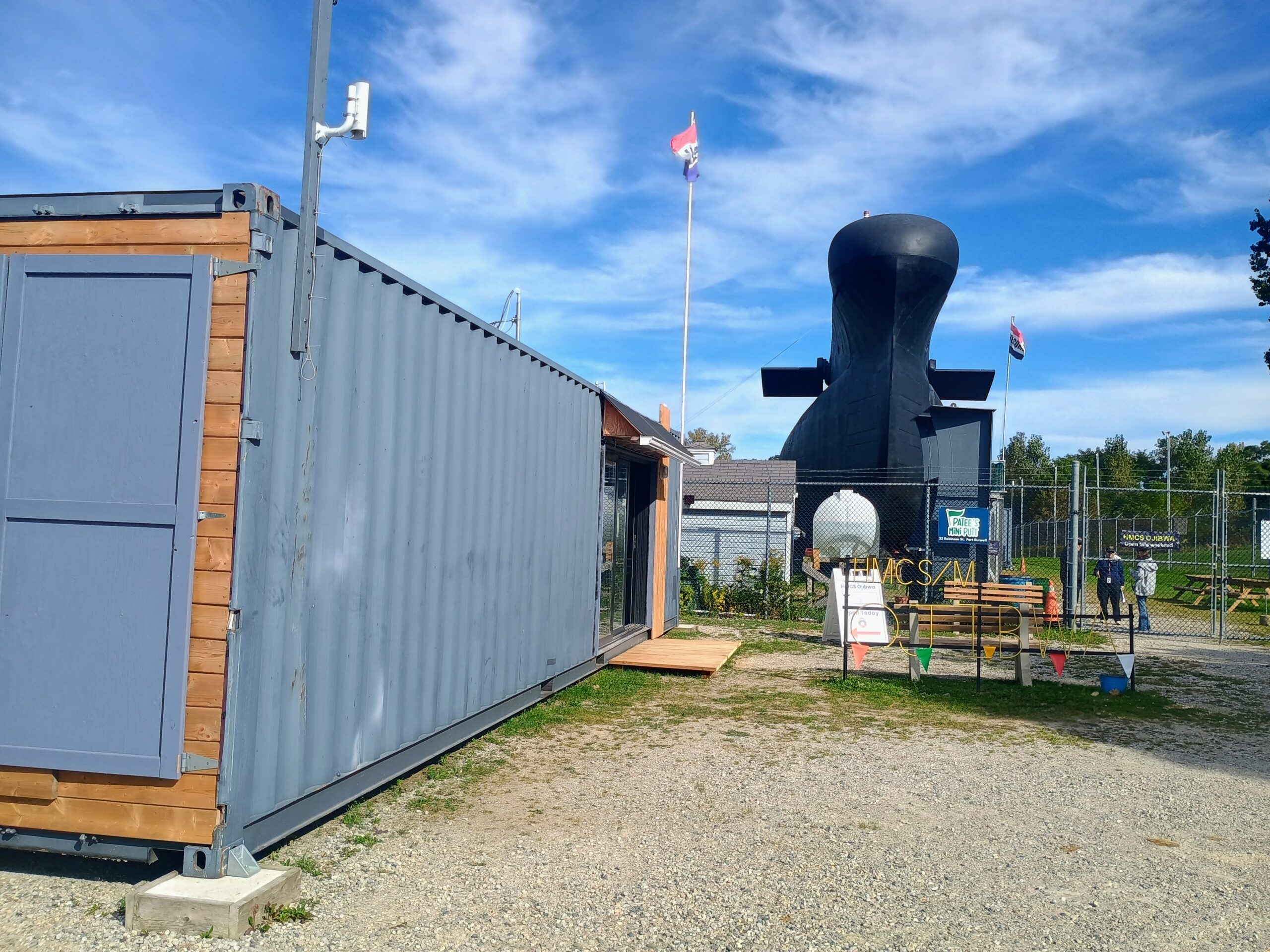
You purchase tickets in the sea Can, which has been turned into an office and gift shop.
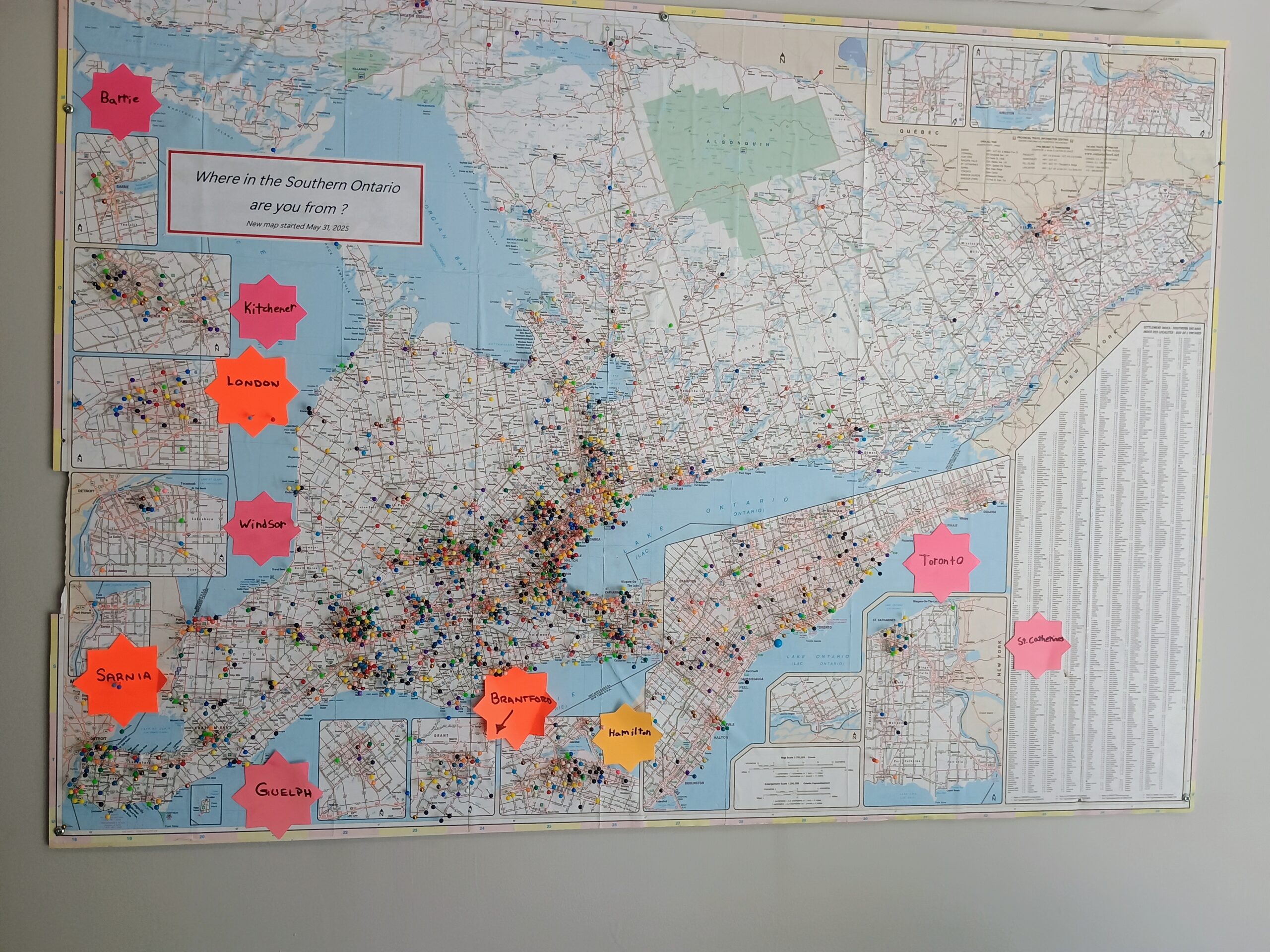
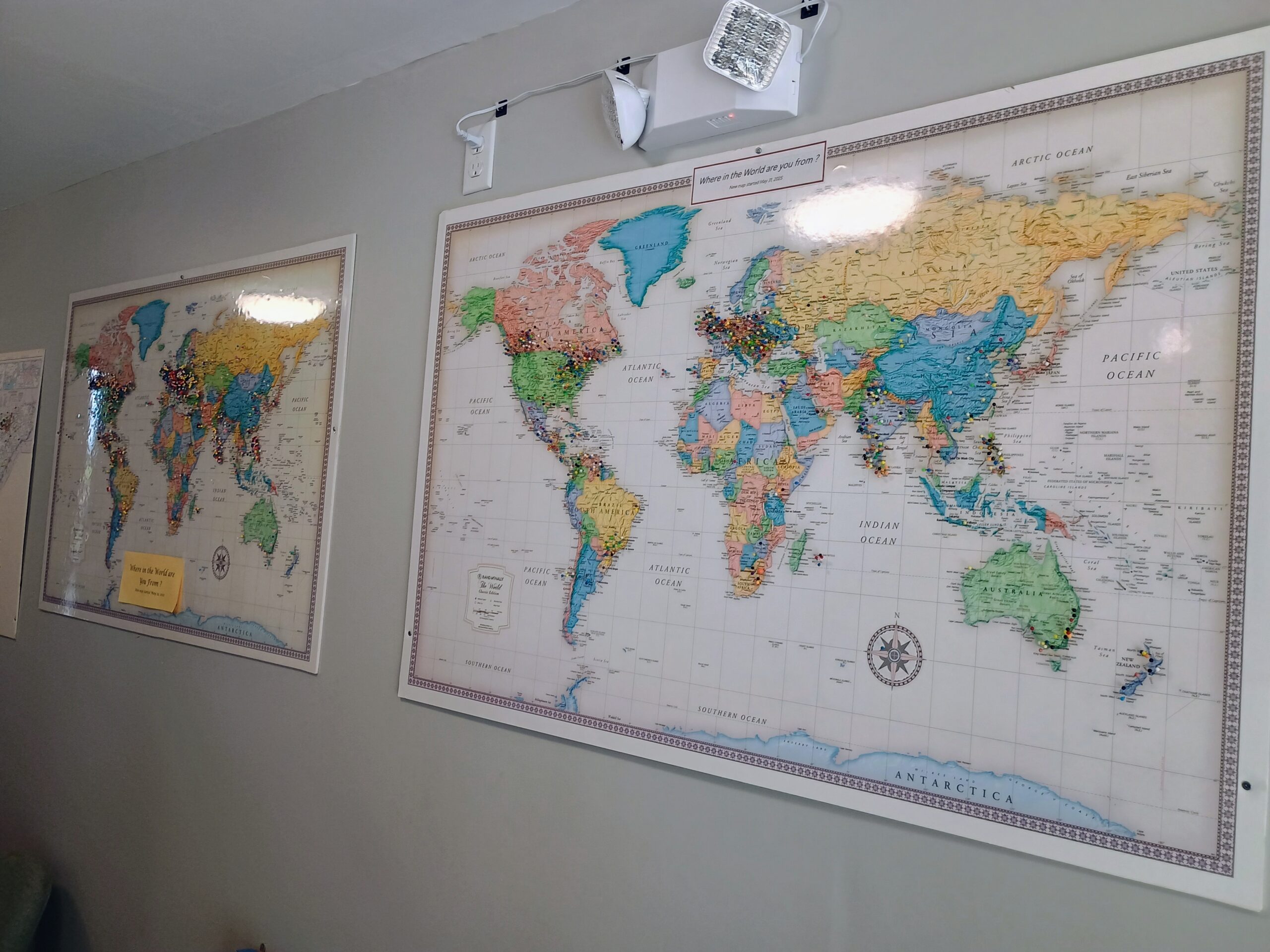
These maps show where visitors have come from. A rather impressive collection of places.
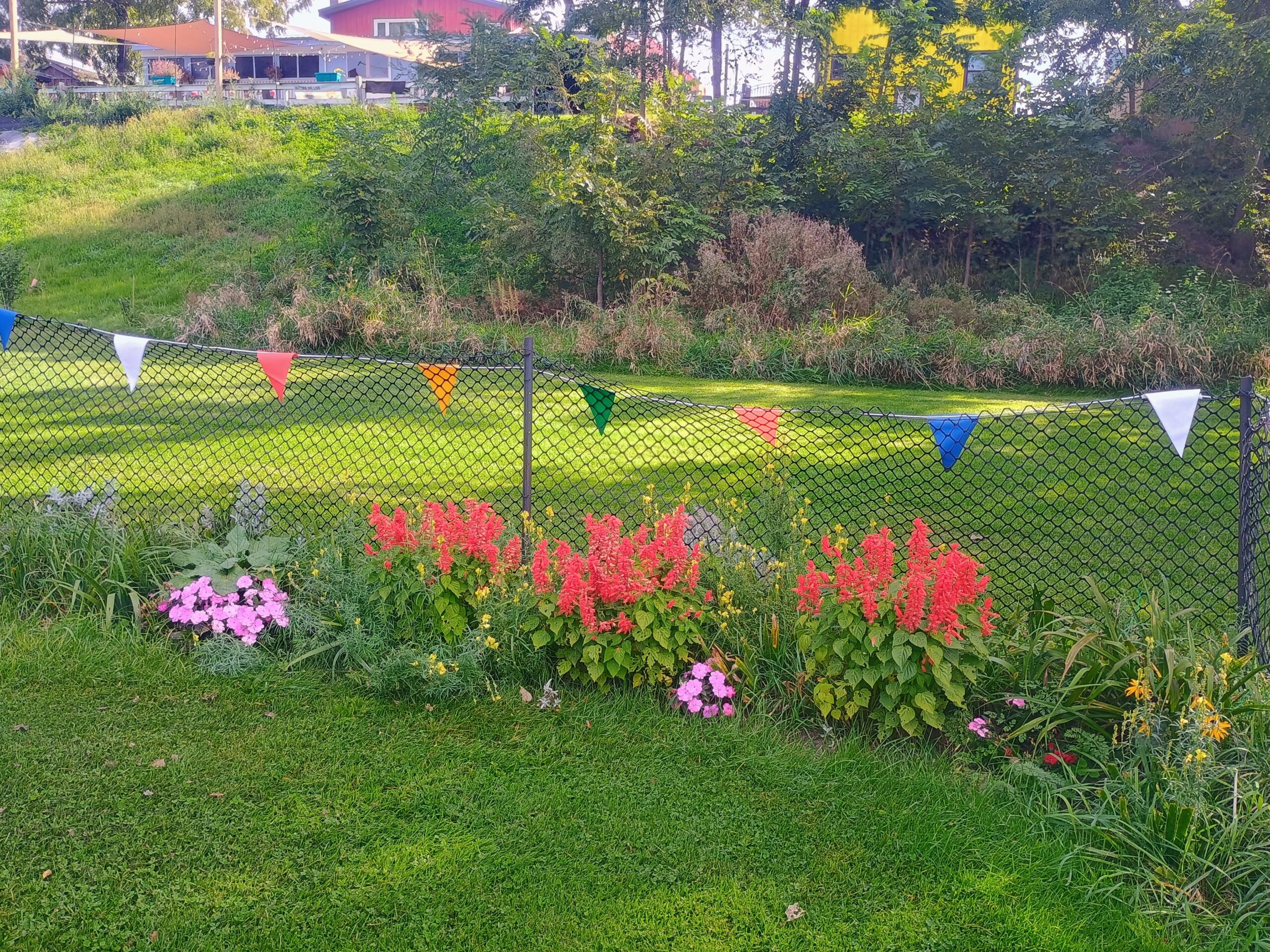
I rather liked the little garden they had planted at the museum.
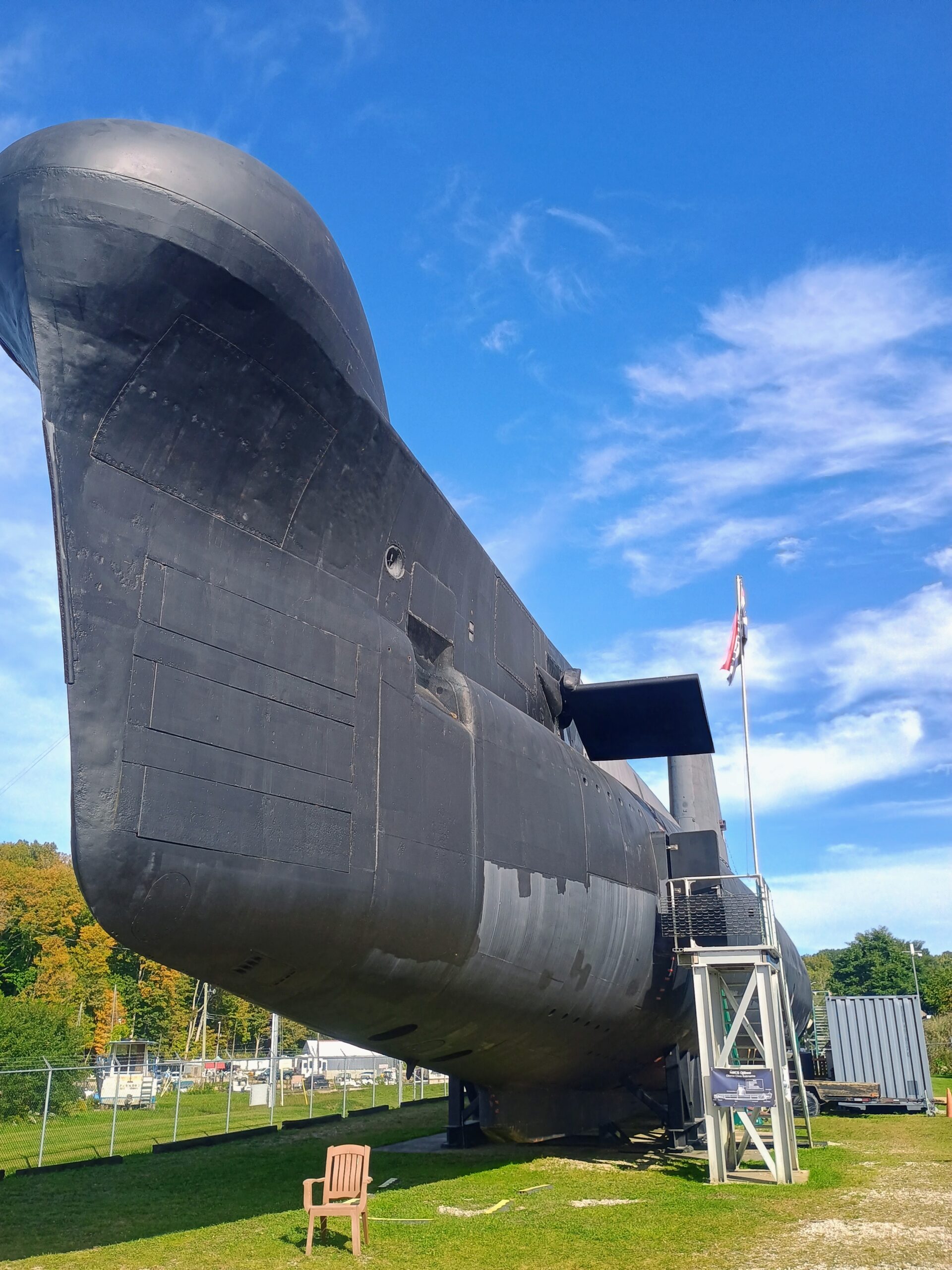
A close-up view of the bow, through the fence.
The next group of photos (and there are a lot) are of the interior of the submarine. To visit Ojibway, you need to sign up for a tour. The Museum would like you to do so online, however end of September, first thing Saturday morning (11 AM) I was not able to sign up the same morning online but I was able to get a place in the tour when I showed up about 25 minutes before the museum opened.
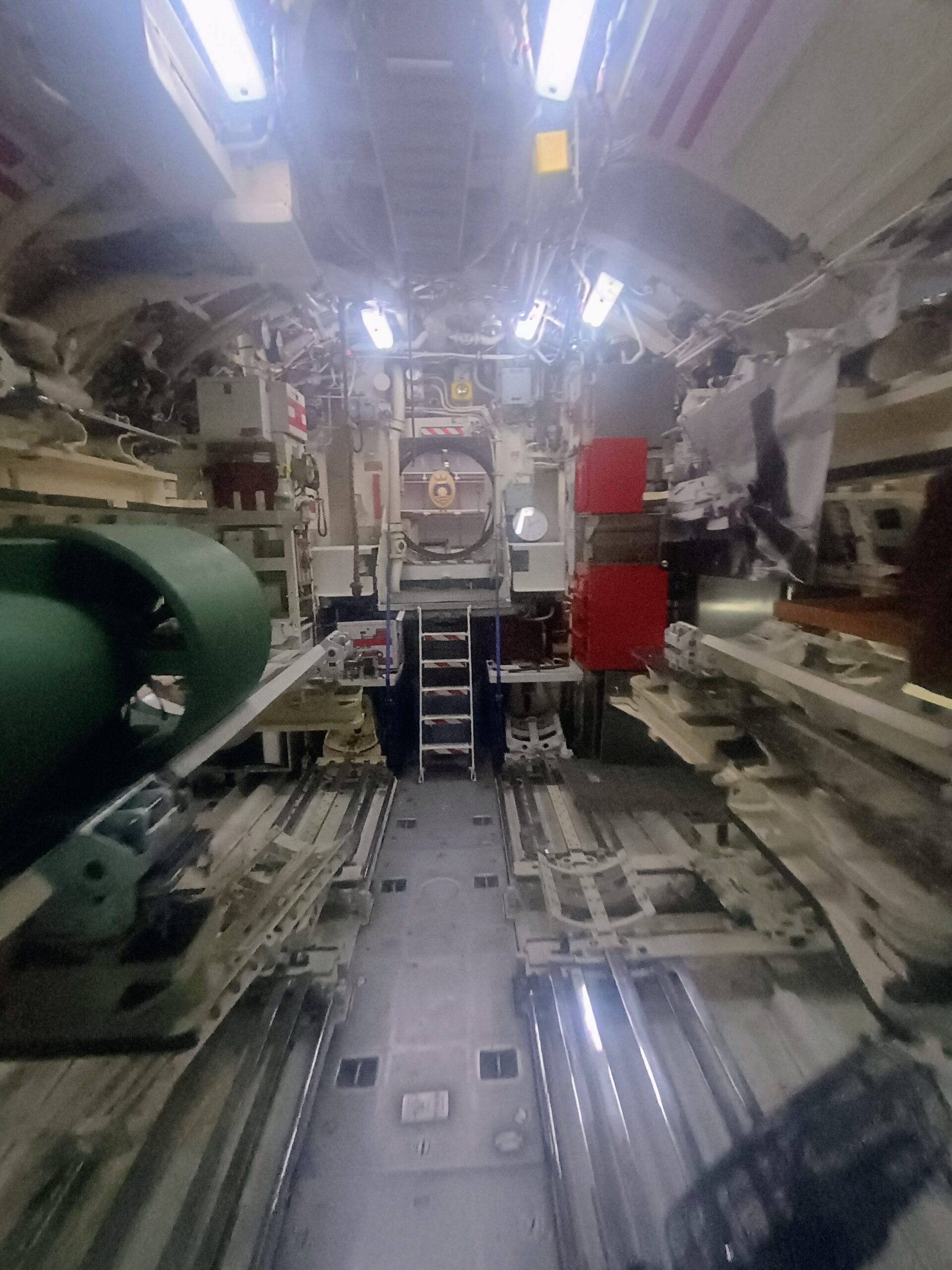
This is the forward torpedo room, which is where you enter from the forward set of stairs. This photo is looking aft towards the next compartment, and on the left you can see a mockup of a Mk.48 torpedo, which is what Ojibwa had when it was decommissioned.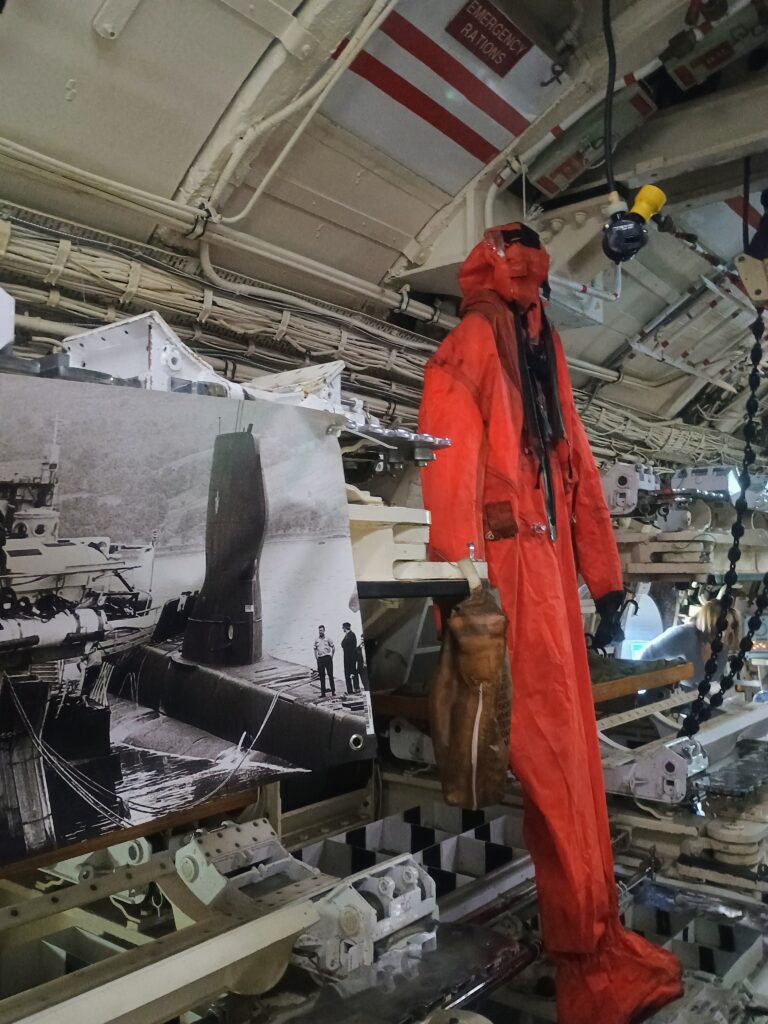
An example of an exposure suit, hanging in the forward torpedo room.
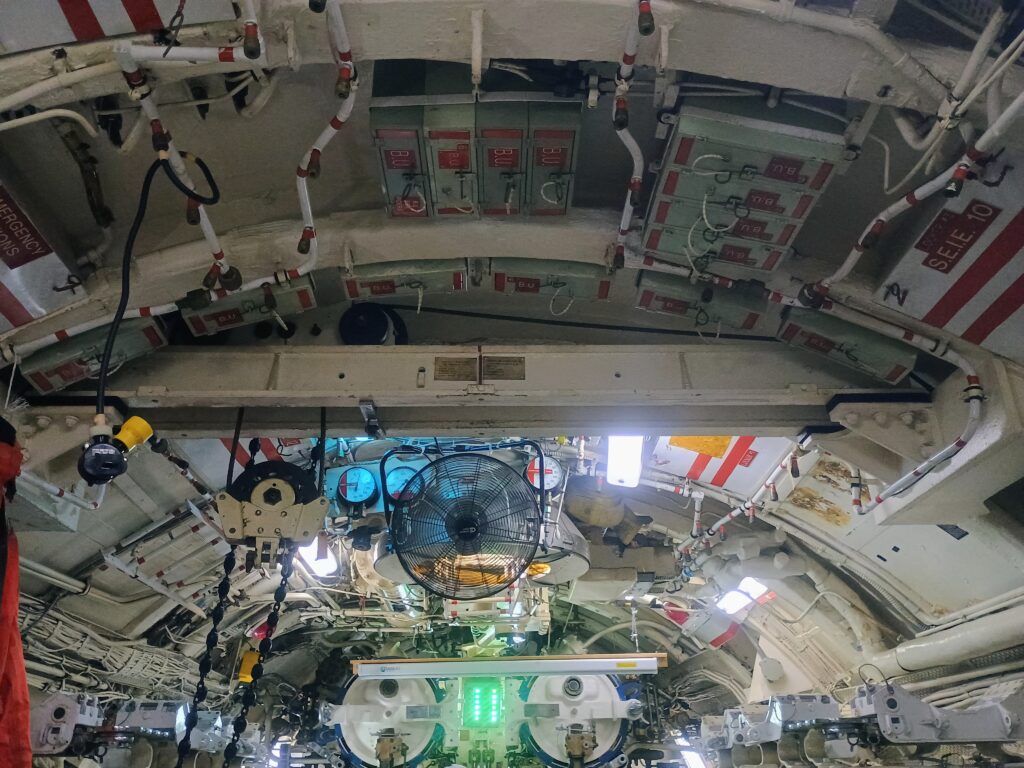
I was absolutely fascinated by the way that all the dials, equipment, pipes and everything were exposed with nothing behind plating. The sheer number of systems that everybody would have to learn for maintenance, damage control and that kind of stuff. Very cool.
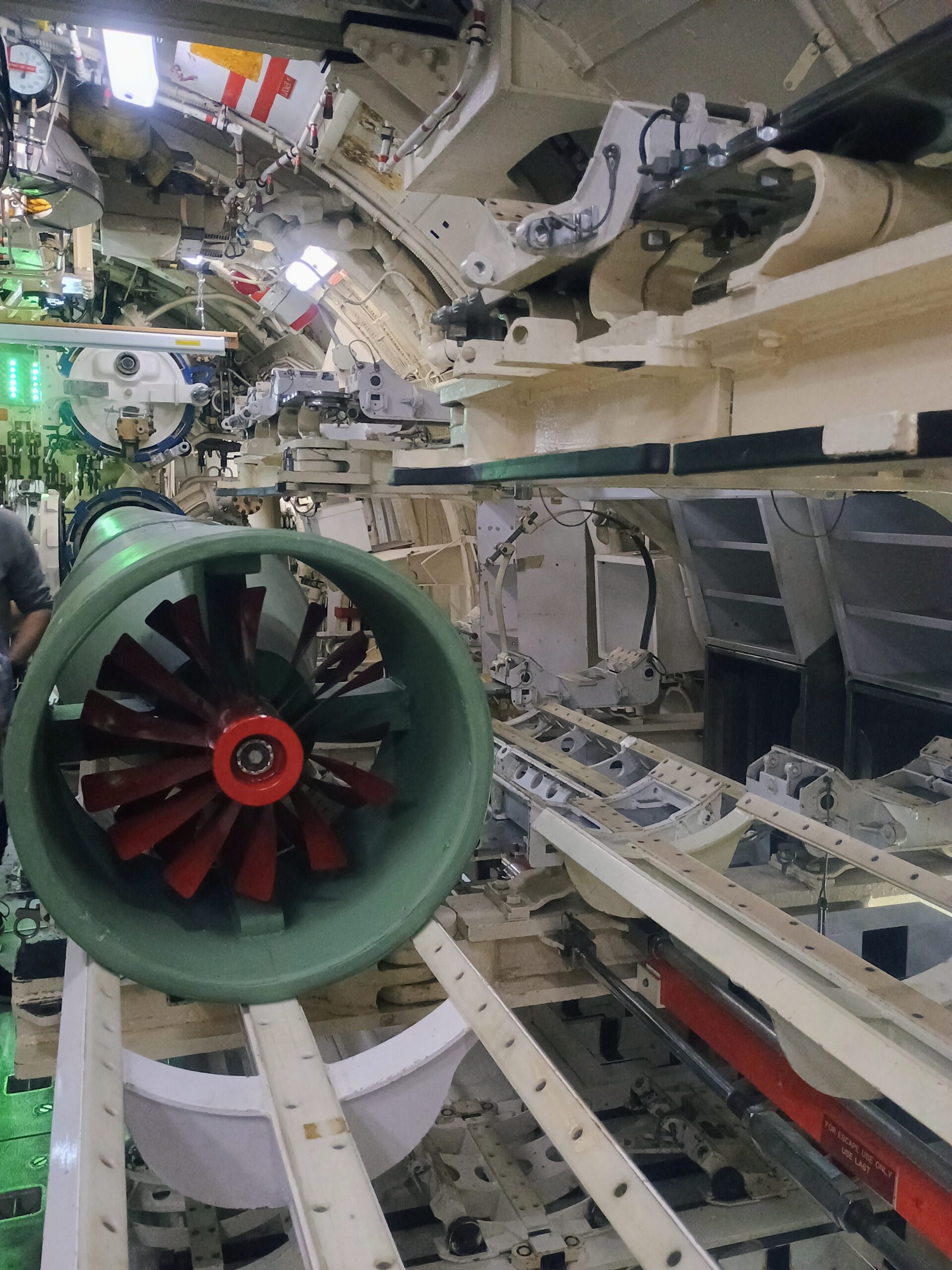
This is looking forward in the Forward Torpedo room, you can see the inboard hatch for one of the torpedo tubes. And yes, there would be several people sleeping in here.
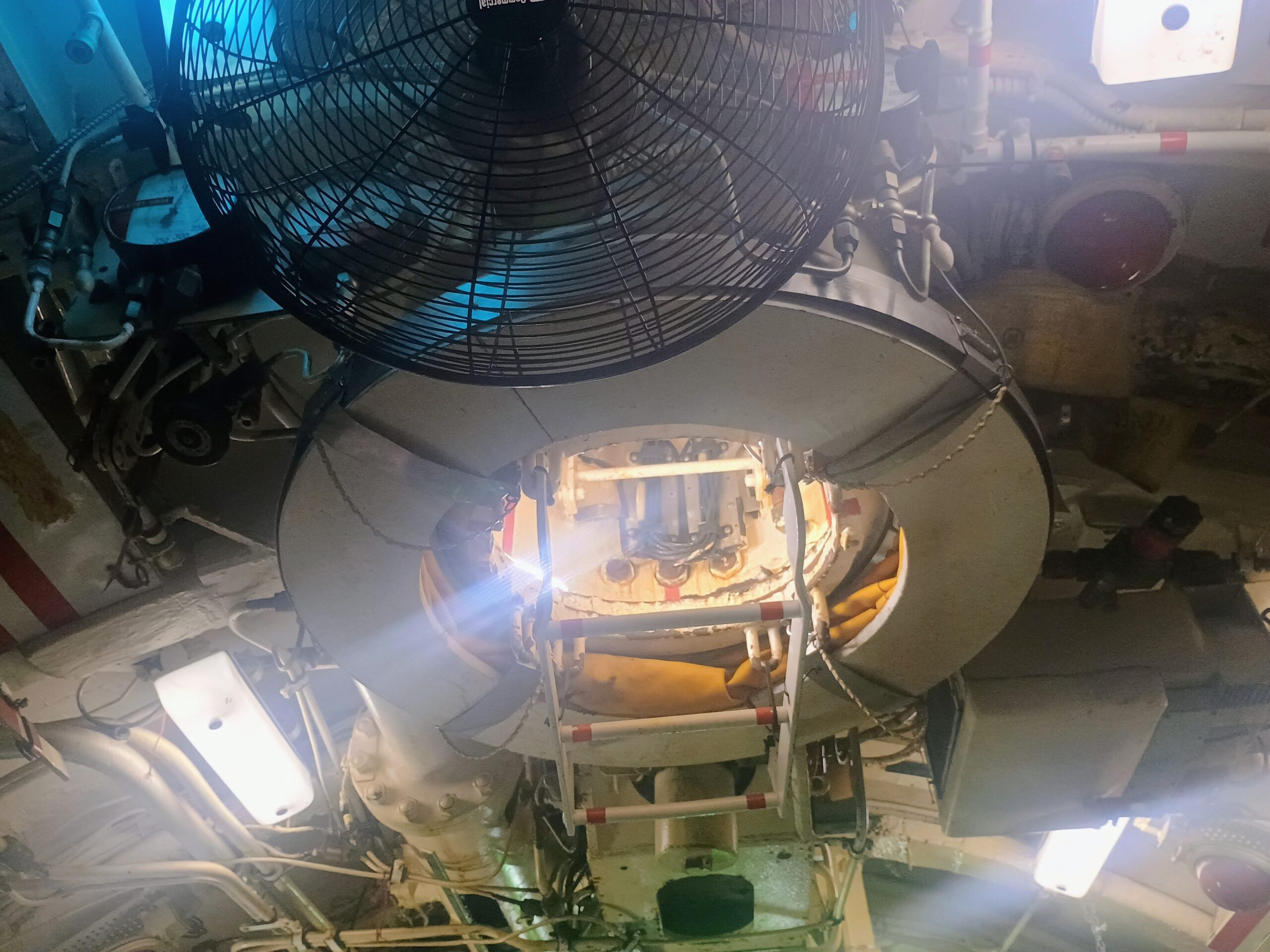
This is related to the exposure suit- this is an escape hatch for this compartment.
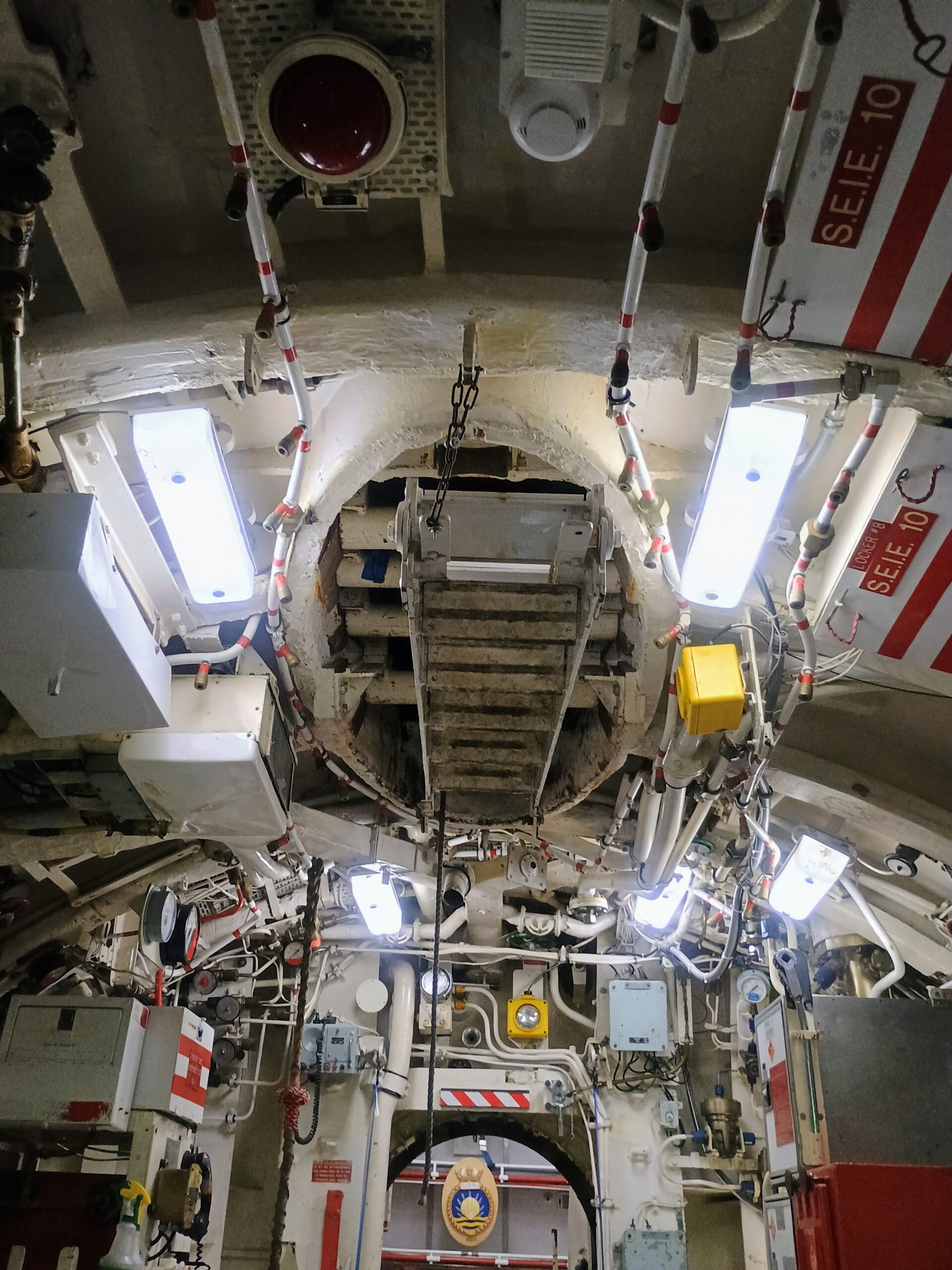
This is the torpedo loading mechanism- torpedos are lowered at an angle along those rungs/rollers until it can be positioned in one of the torpedo racks or tubes.
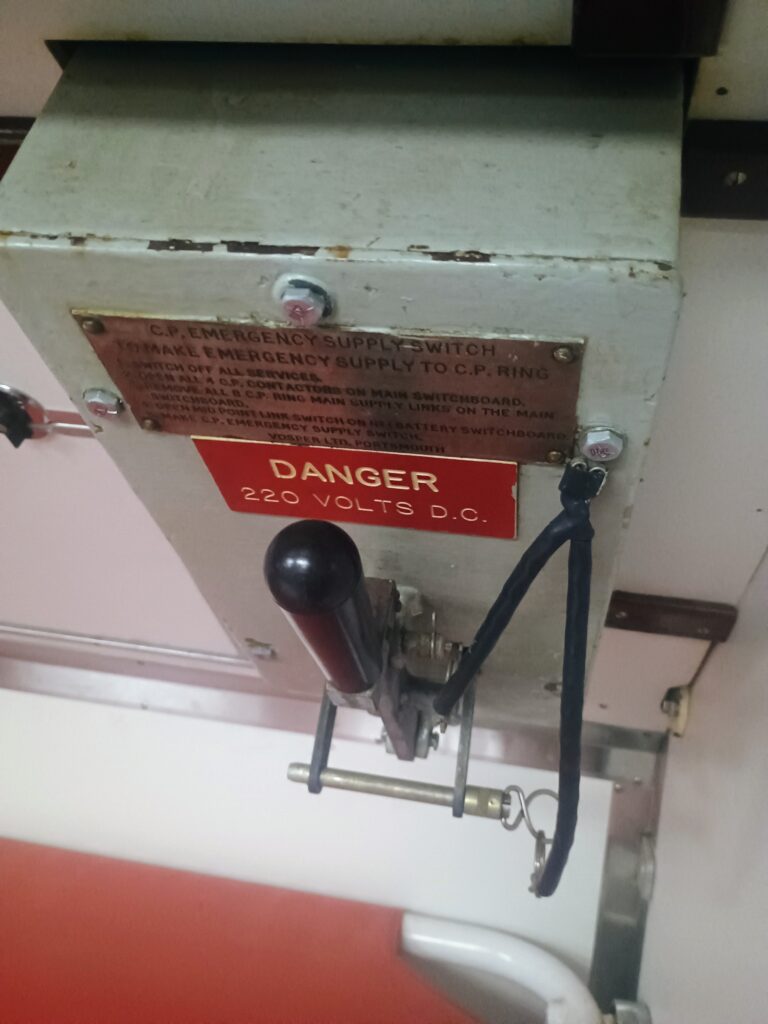
Ojibwa was of course built in the UK at Chatham – it has 220V systems with the European standard.
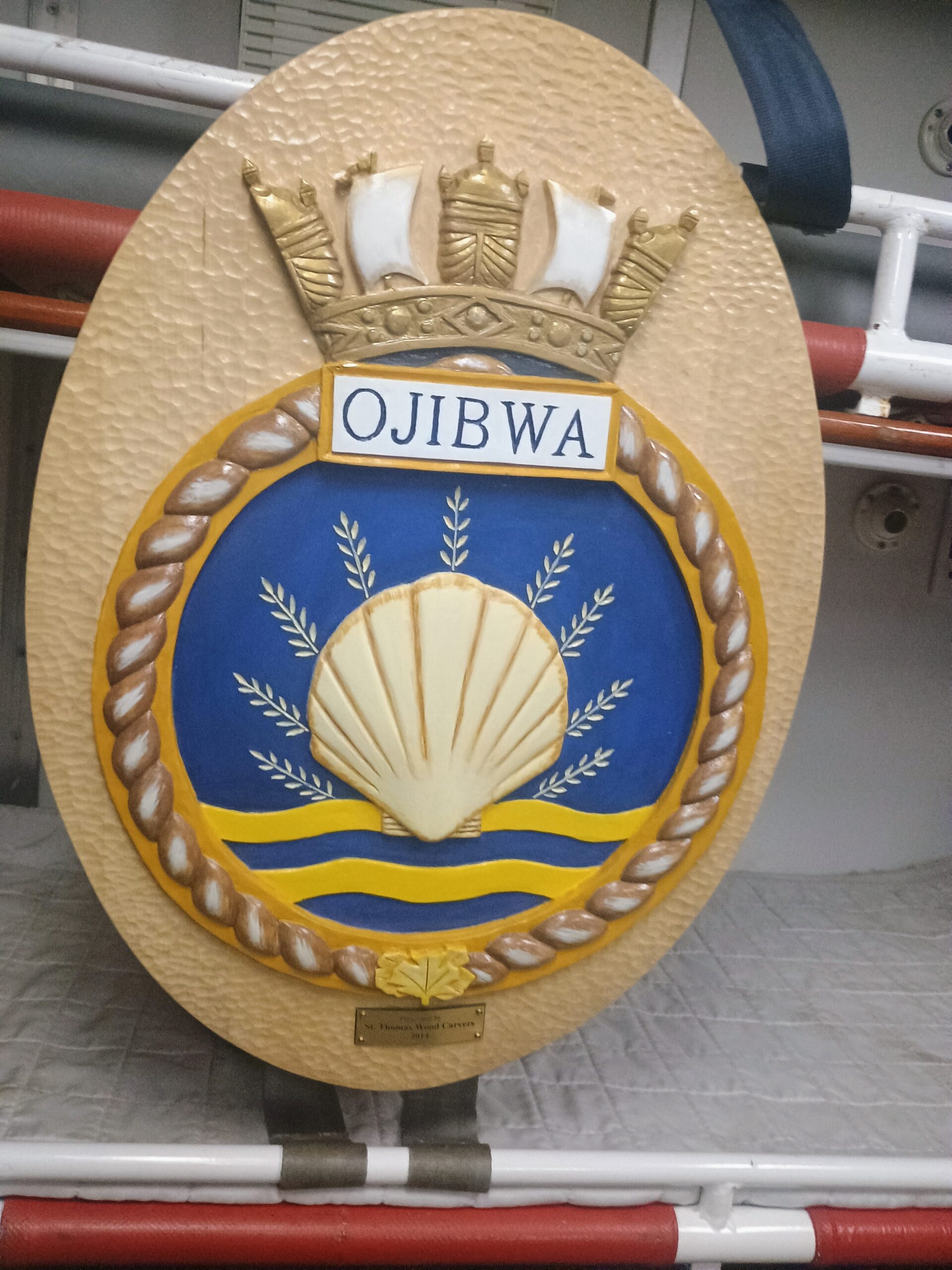
Ojibwa‘s crest.
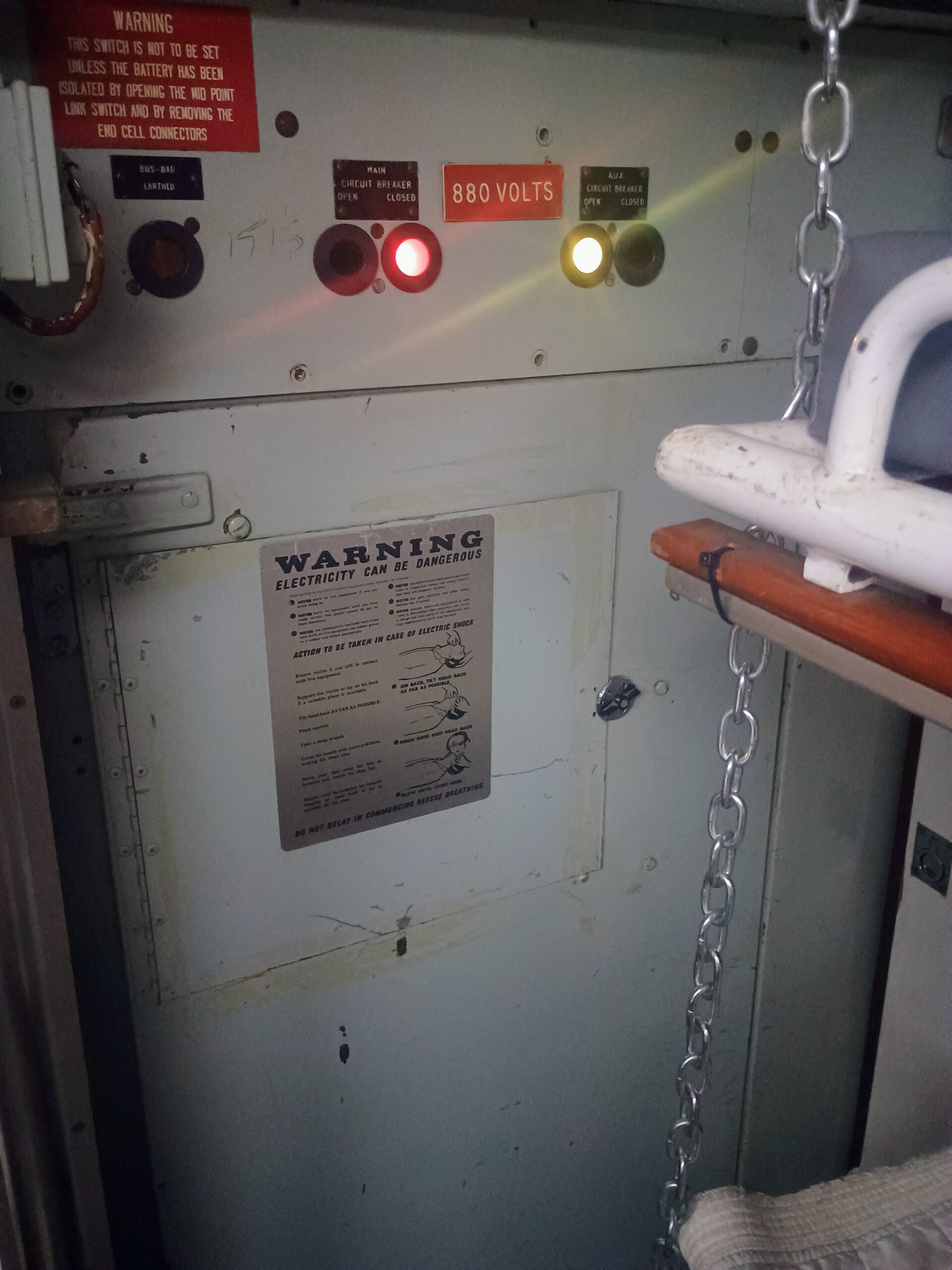 As a Health and Safety committee member who has been fighting for better signing on our boats at work, I always find this kind of industrial and maritime safety signage fascinating.
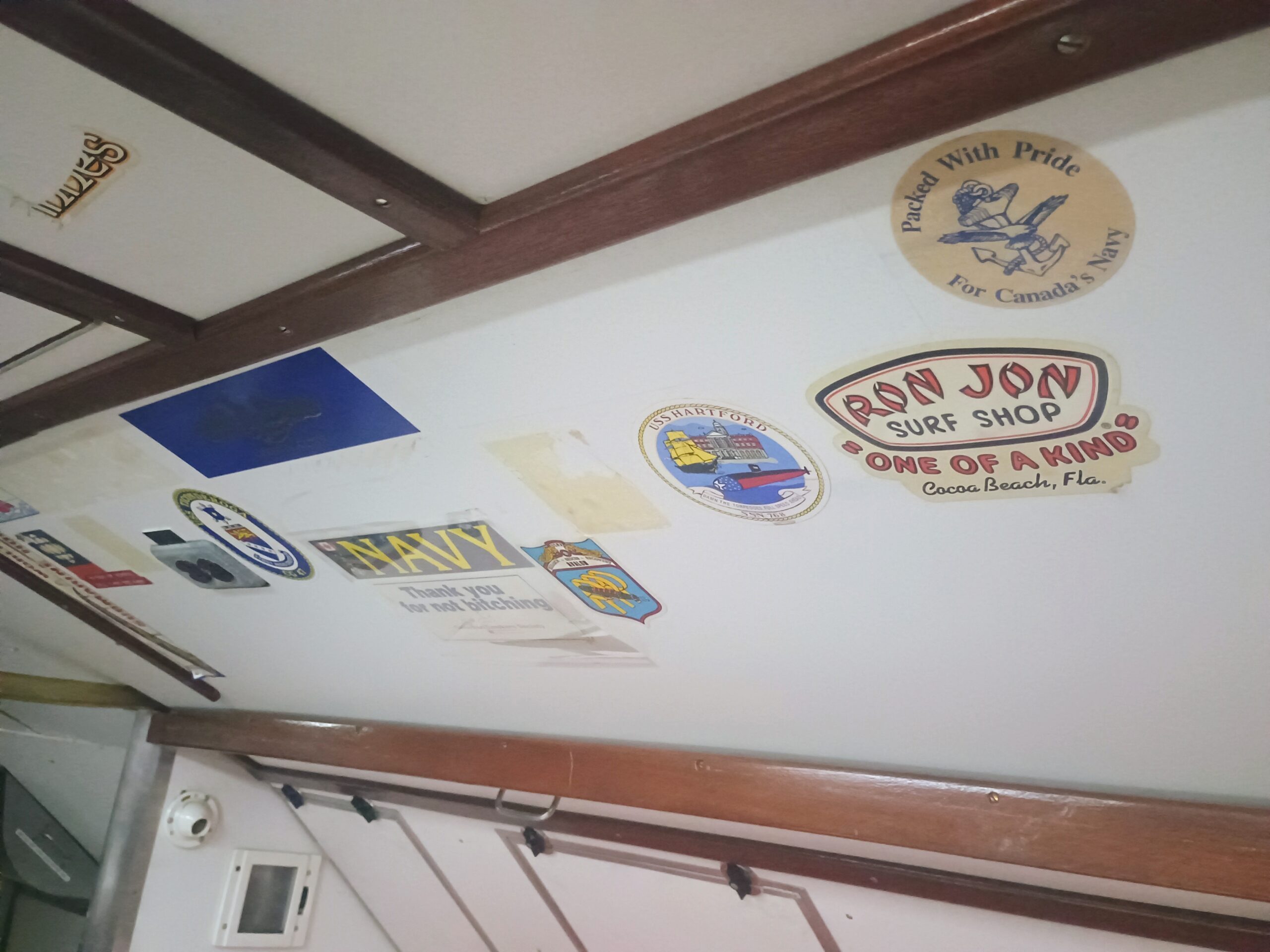
The tour guide (who was not a submariner himself, but a local and an enthusiast) was telling us (the other members of my tour) that the Navy wanted the ship essentially sterilized when it went to the museum, but that the museum really wanted the boat essentially intact as it had been decommissioned. I’m glad these stickers and other similar things survived the deaccessioning process (to use the archival term, not the military one)
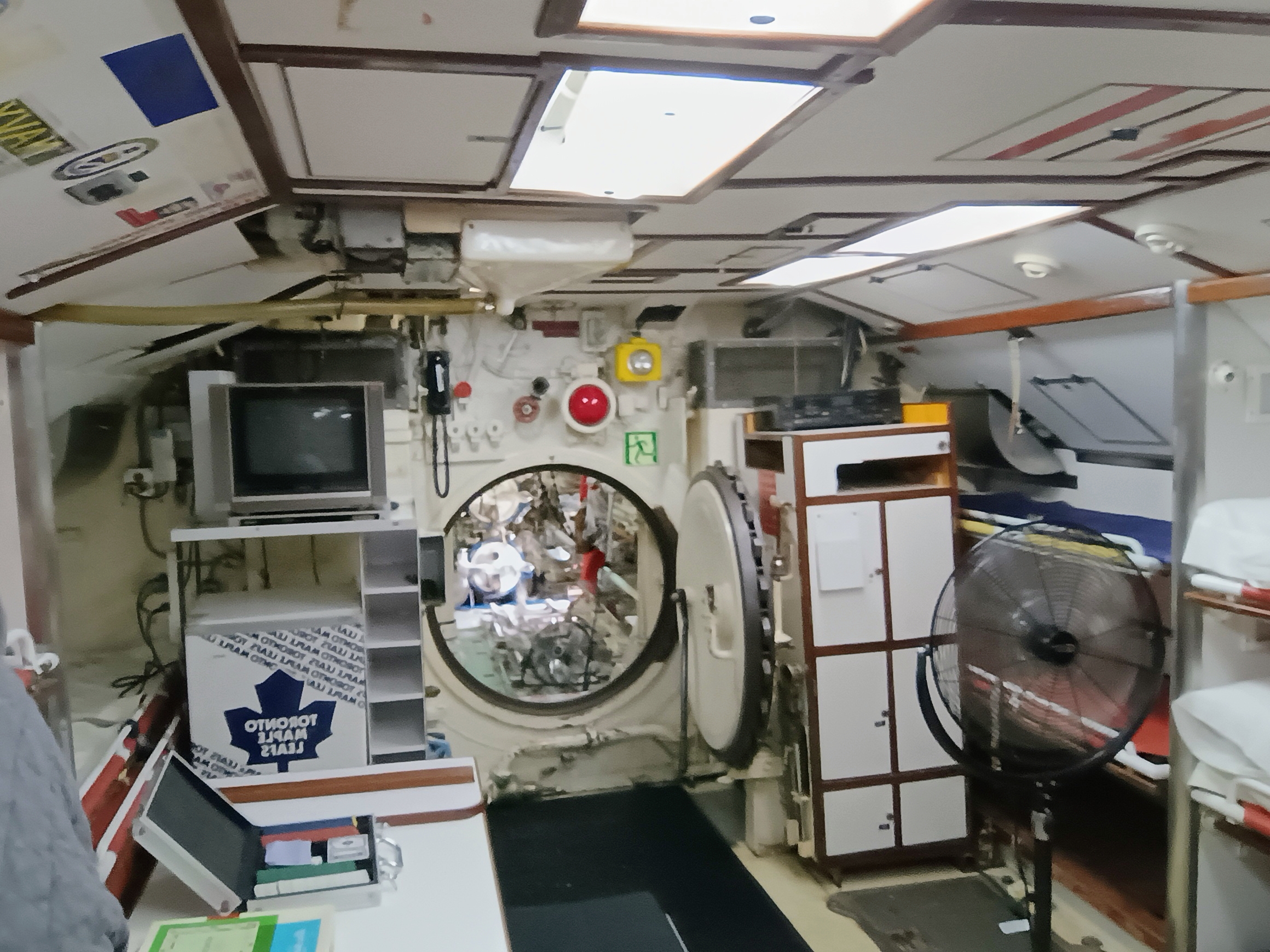
This is looking forward from the next compartment- amongst other things, a berthing compartment- into the forward torpedo room. I only include this because of that blue and white logo thing. I don’t care about hockey, but I found this pretty fascinating.
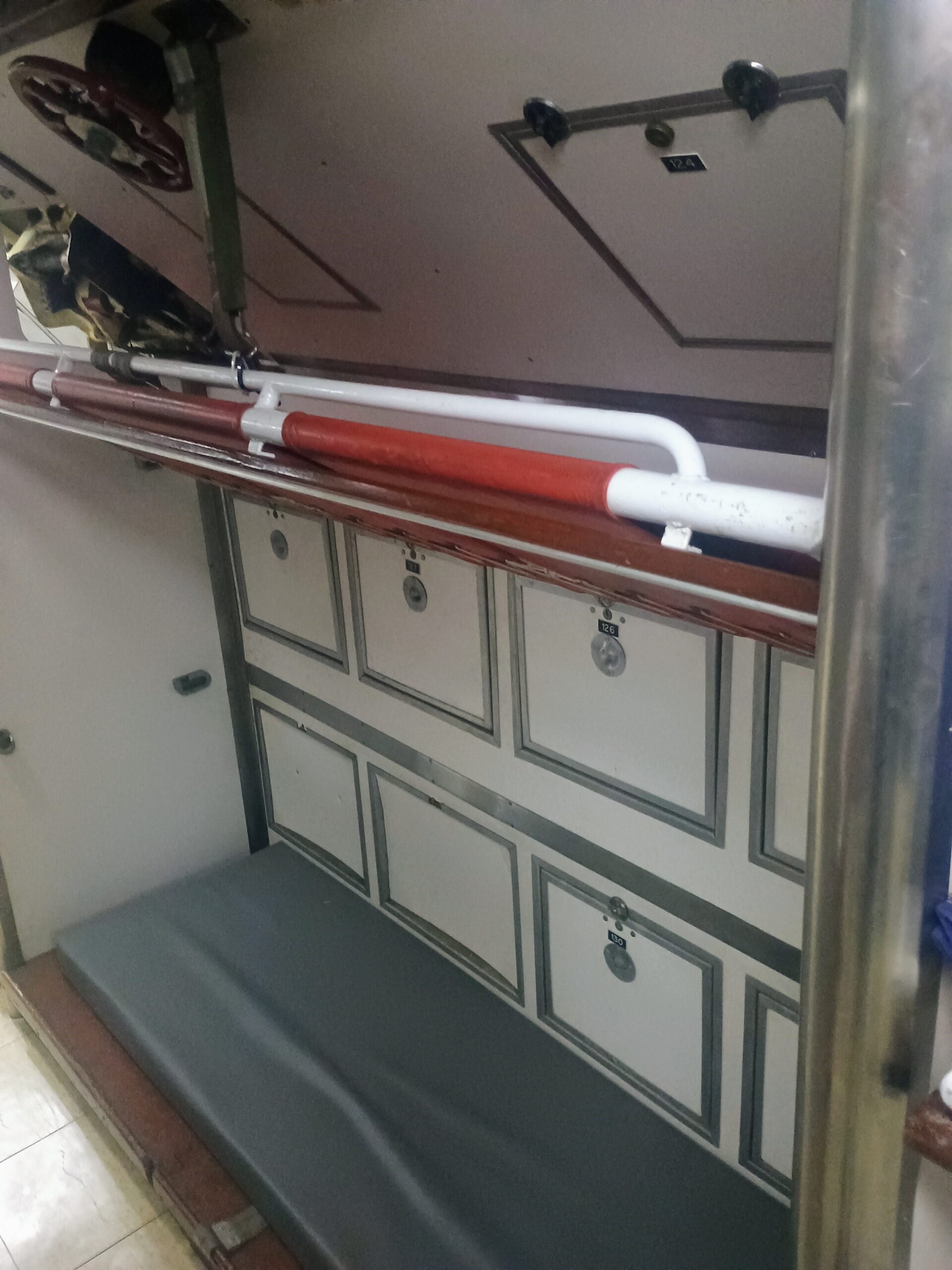
Lockers for sailors personal gear. Not very big.
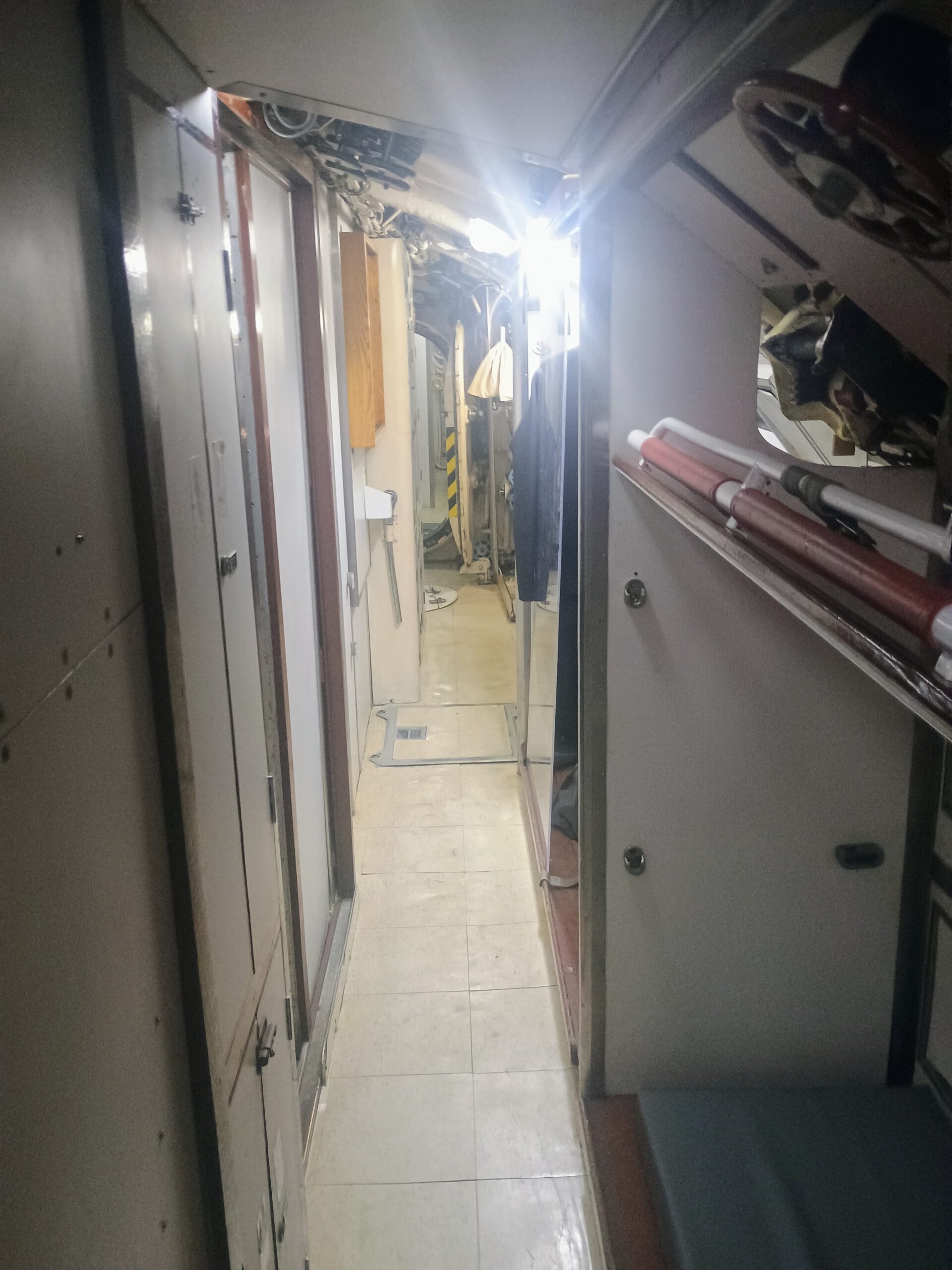
Looking down the companionway aft to the next compartment. 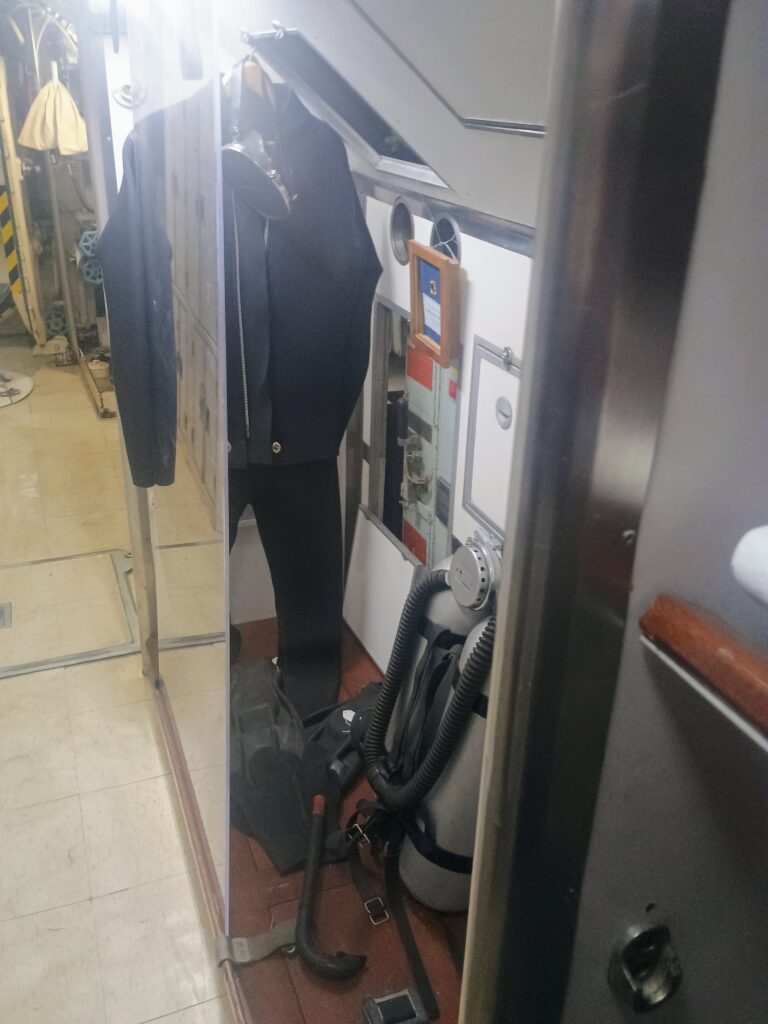
Diver’s suit. Apparently every time they stopped the diver had to go out and look at the propellers and various things, do a general inspection of the hull.
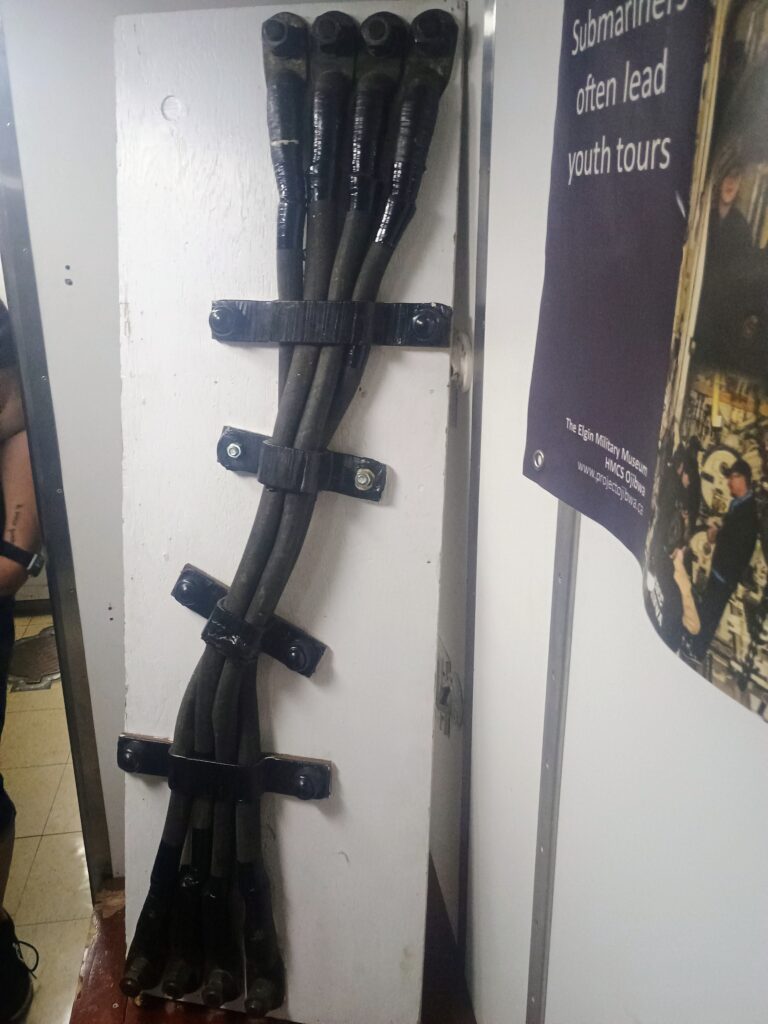
These are some of the power cables that ran from the batteries to the ship’s electrical equipment. This is just as a display, they were not mounted here operationally but it was really interesting to see how substantial they were.
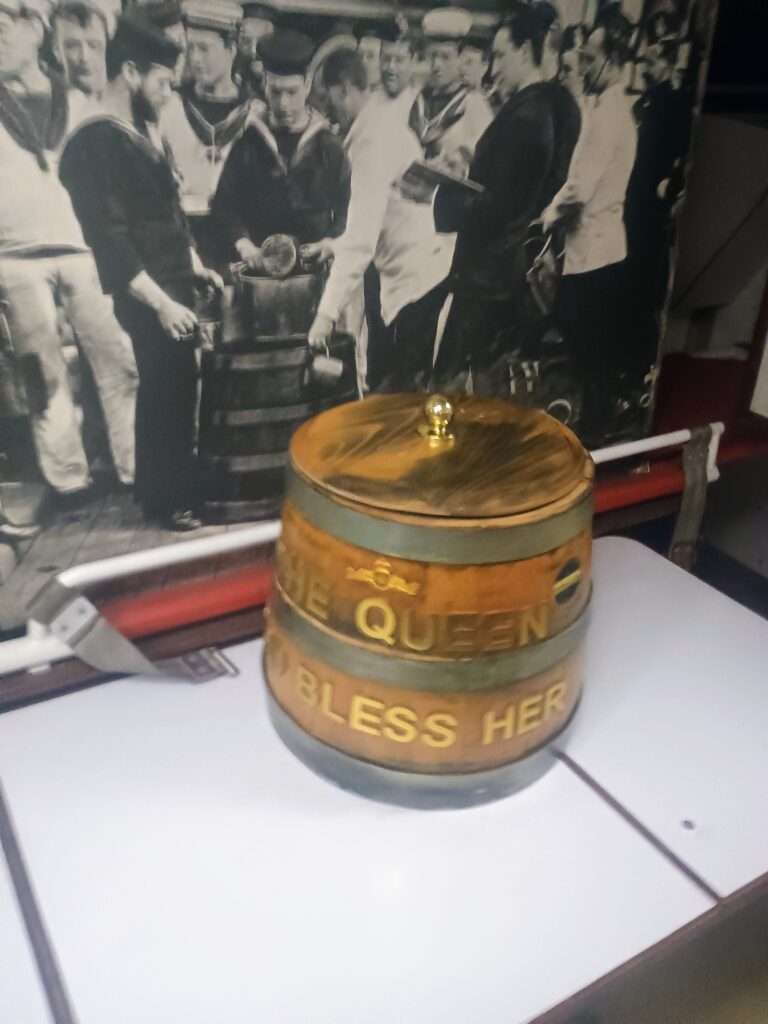
The ceremonial rum container. This was not the actual container that rum for the tot was kept in on a daily basis. Royal Canadian Navy has stopped issuing the tot but unlike the United States Navy it is not a dry service. (Coast Guard is also not a dry service).
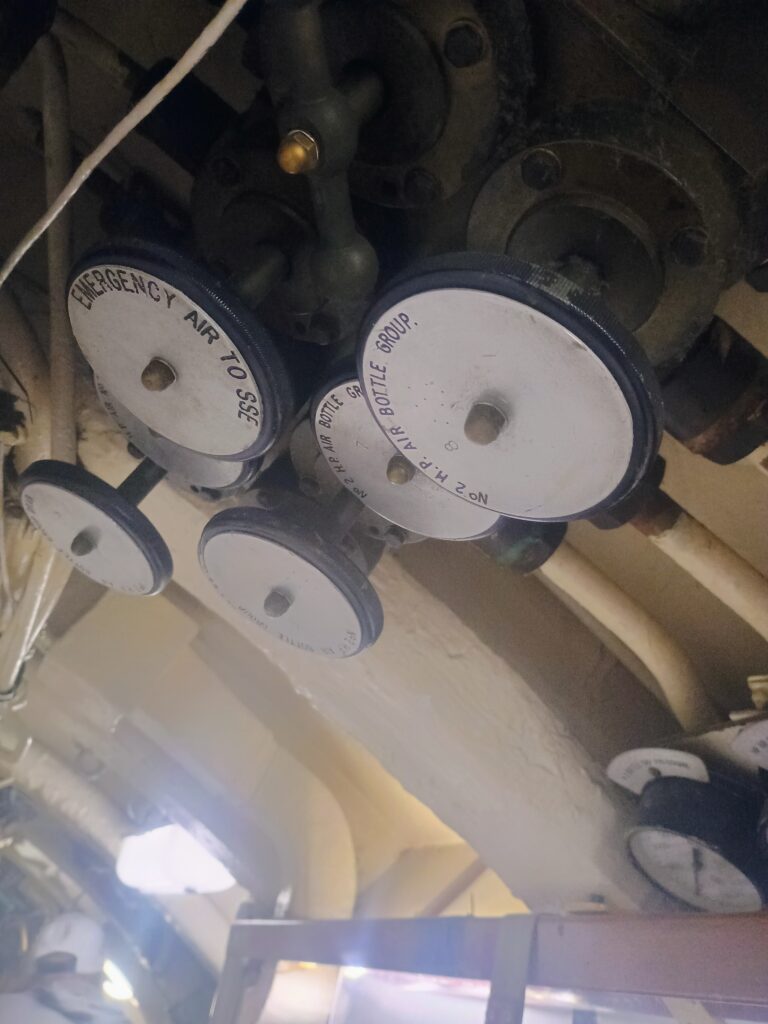
These dials may be very mid-century in design but they were certainly effective. Classic Royal Navy design aesthetic.
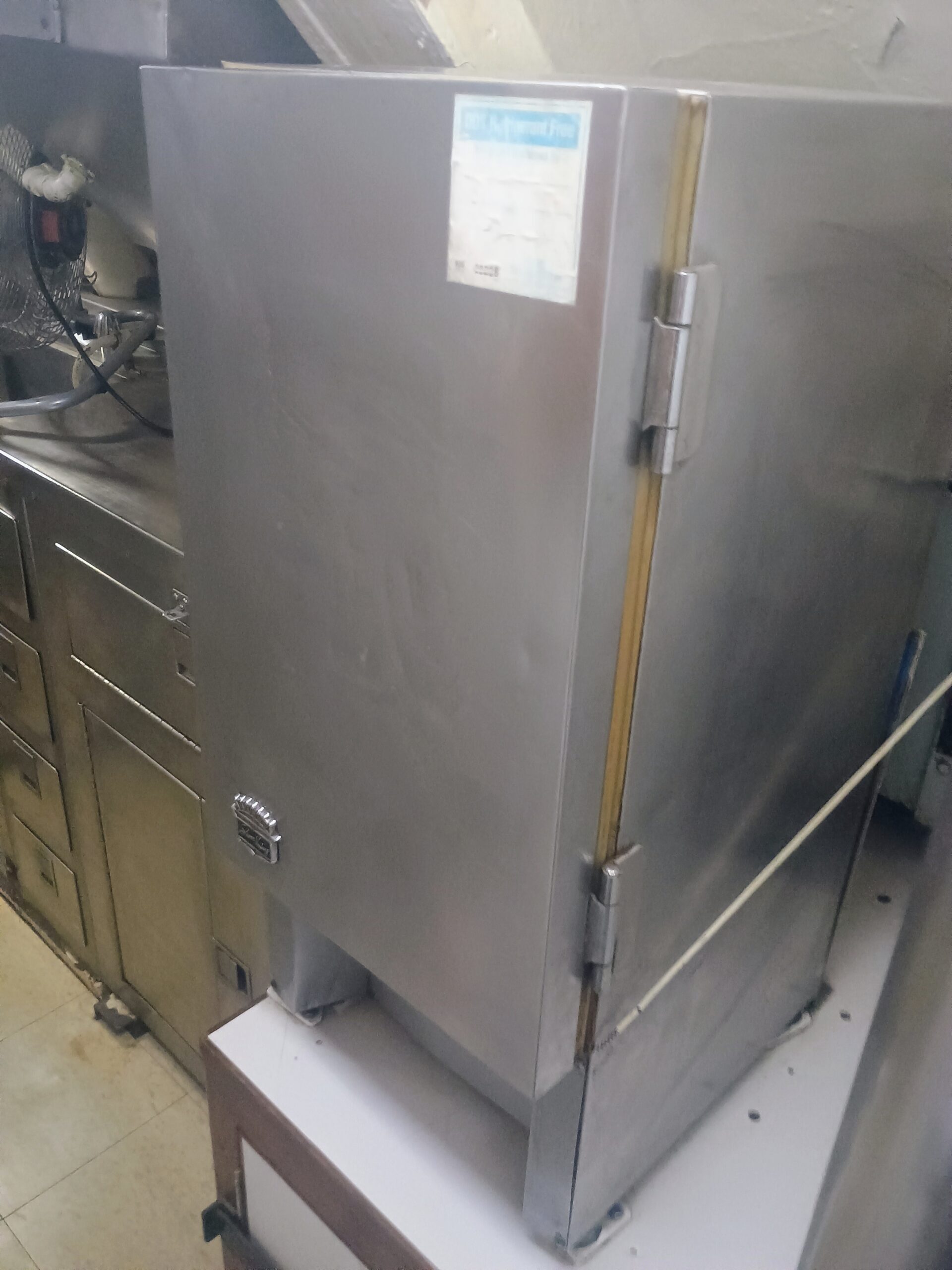
I believe this fridge was for medicines and things like that- I don’t believe this was for the galley but I could be mistaken.
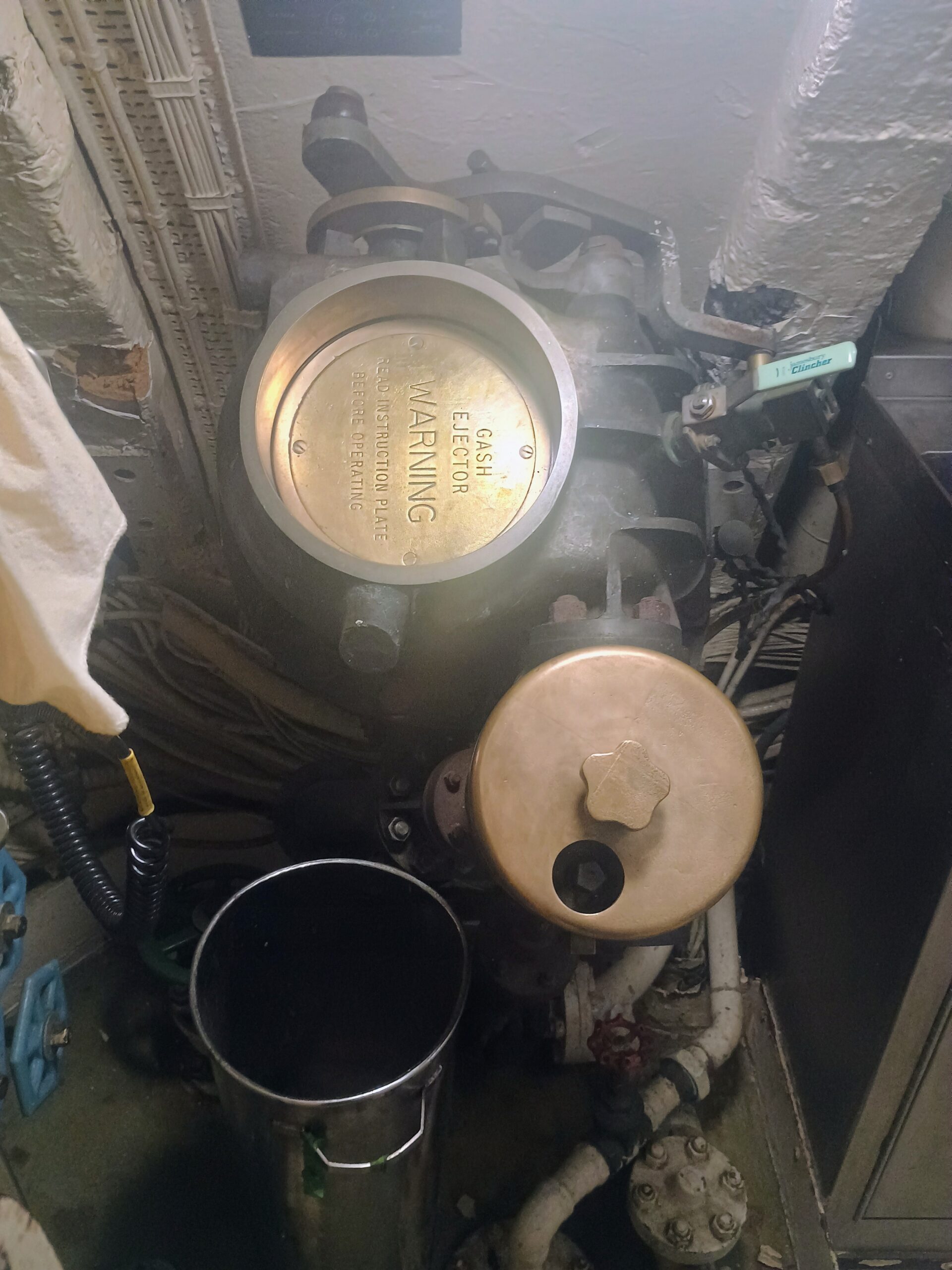
‘Gash Ejection’ Royal Navy slang (the same as was used on the Toronto Brigantines when I was there)- Garbage ejection. For things that could be ejected without giving away the position of the submarine.
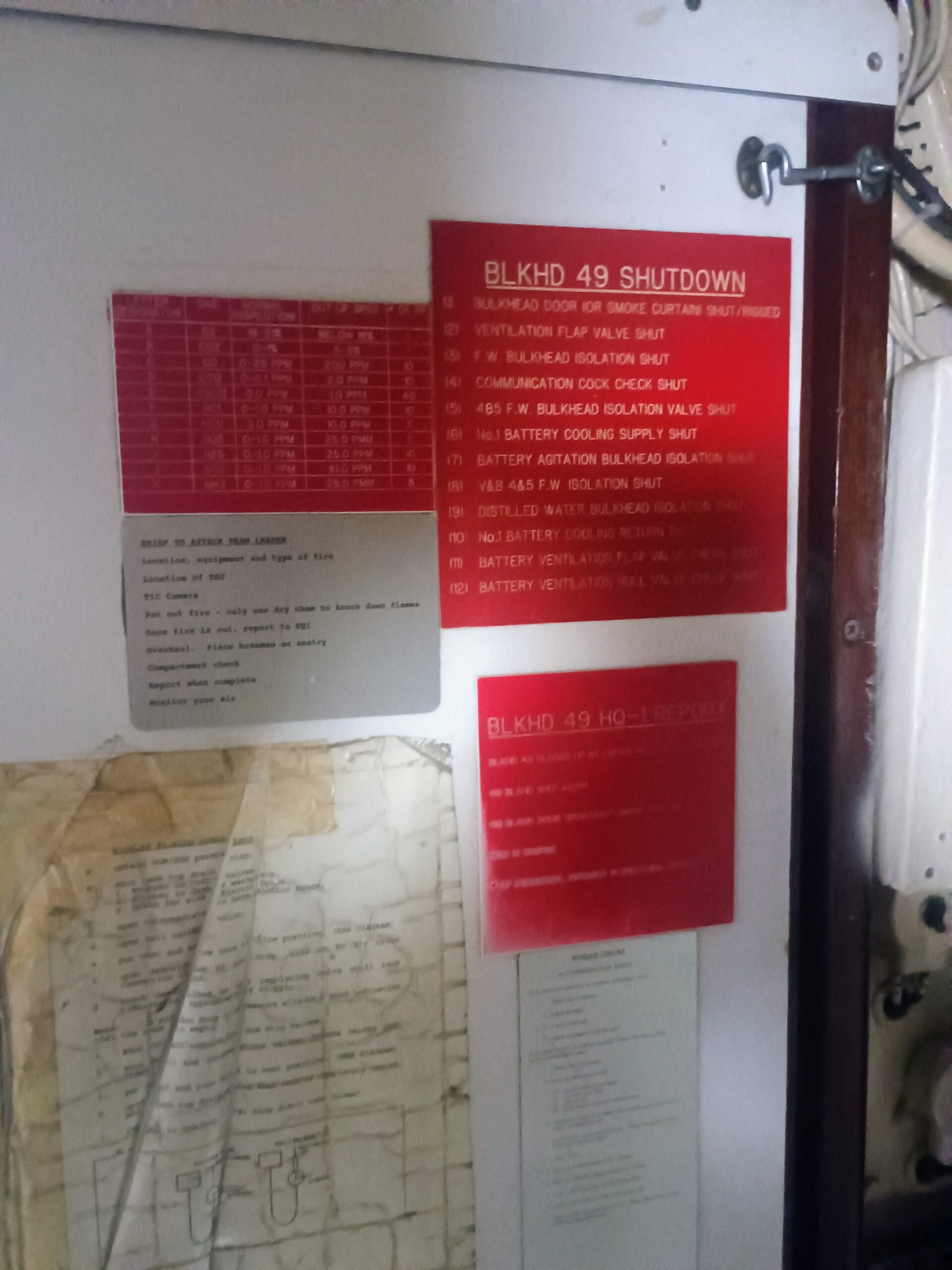 \
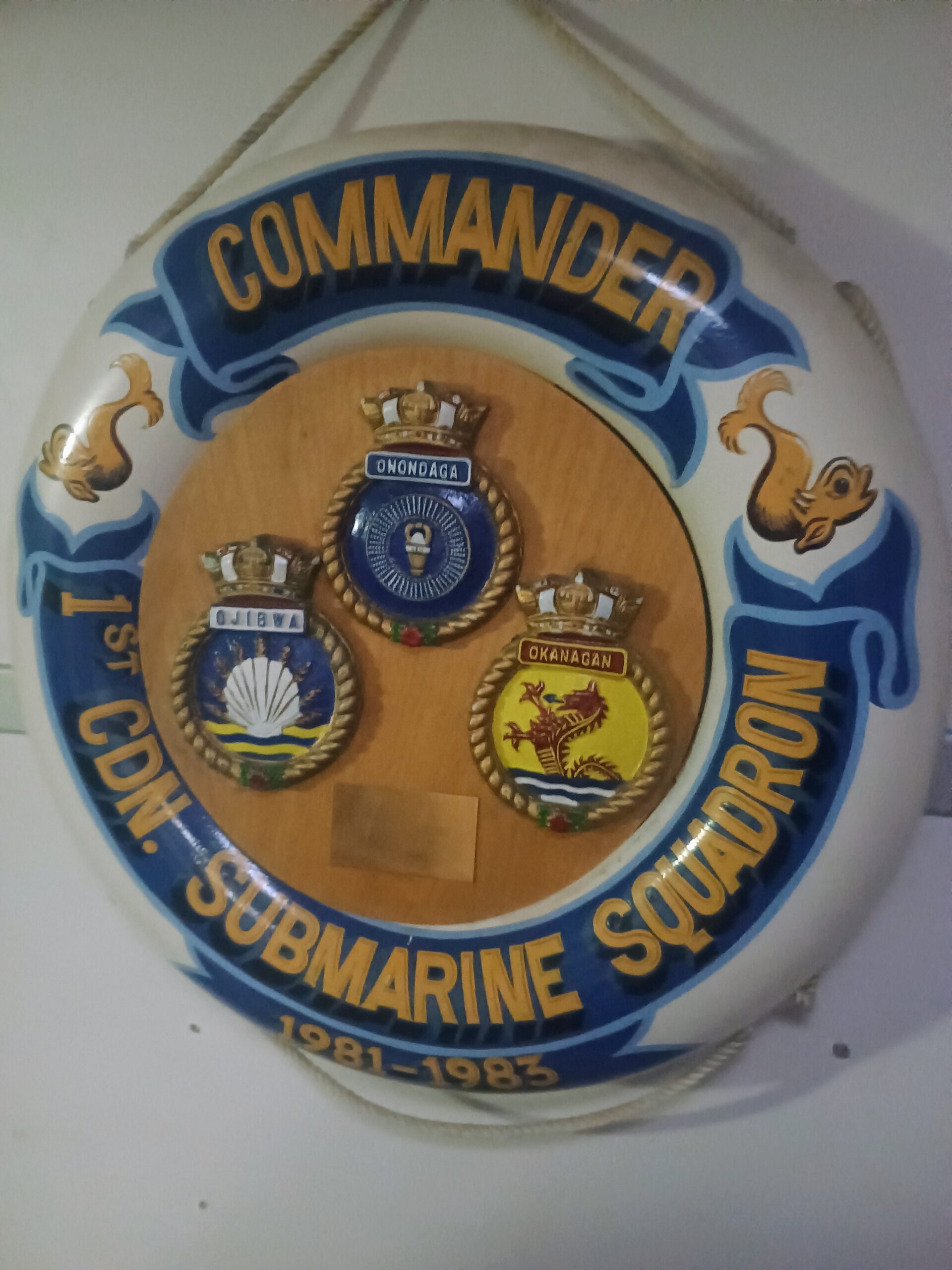
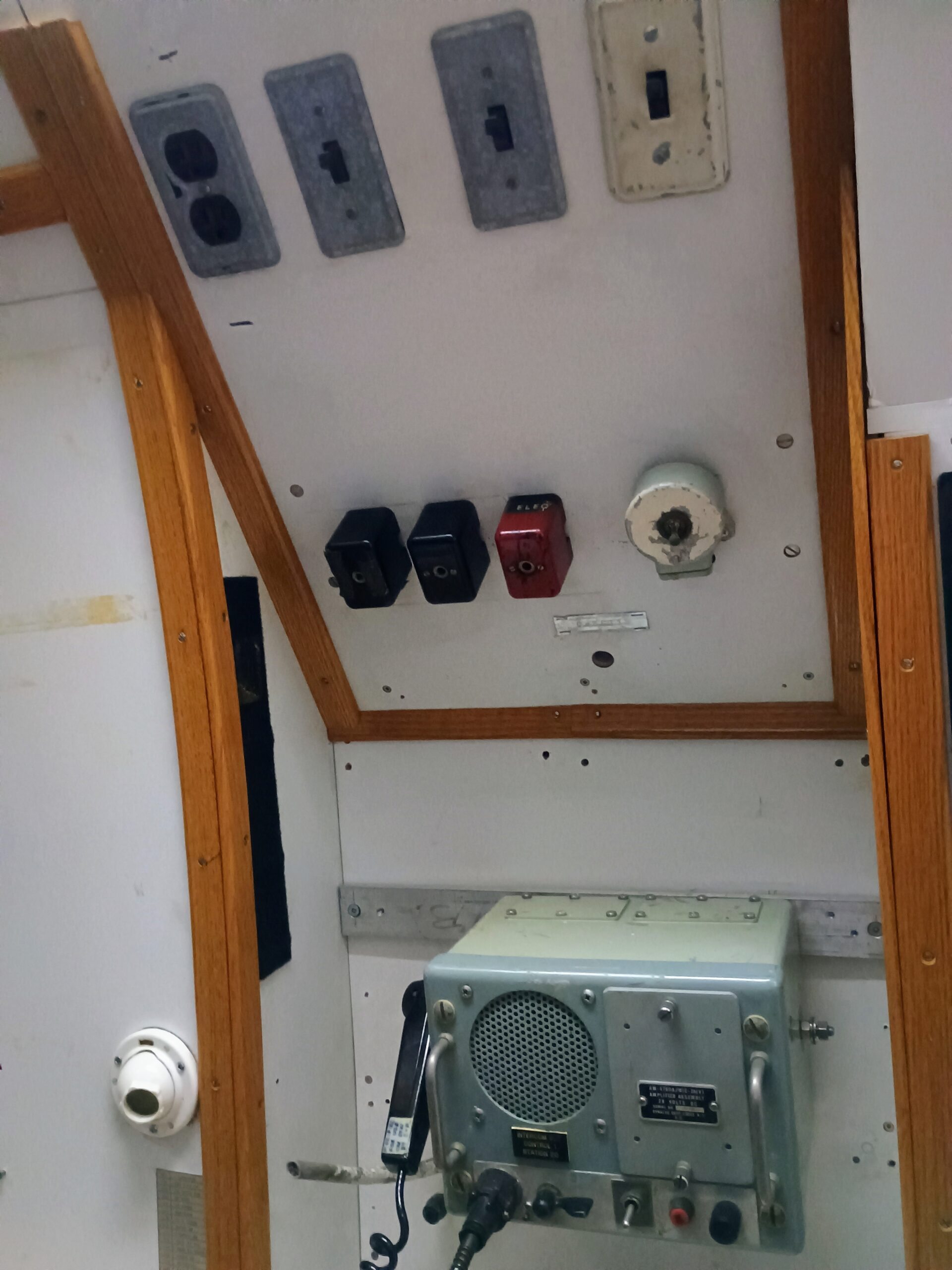
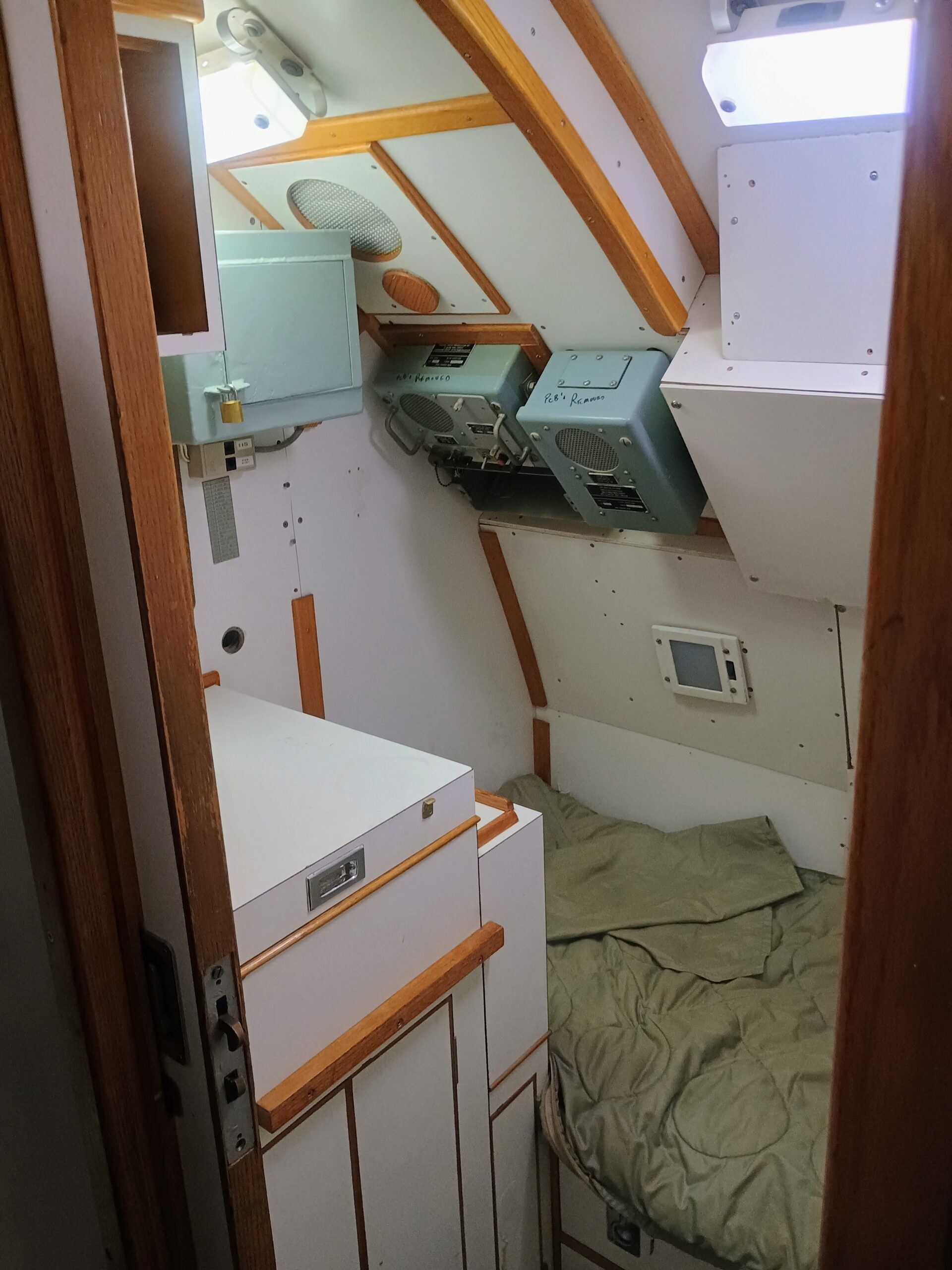
I believe that I’m looking to the port side here, with aft to let and forward to right. I believe this is the Captain’s sleeping cabin, hence the communications devices right next to the bed- just like Haida which has a voice pipe right next to the bed in the Captain’s sea cabin.
Part two will continue as the tour moved further aft.


